Trust Your Nose: The Secondhand Shopper’s Guide to Smells That Wash Out and Smells That Mean Walk Away

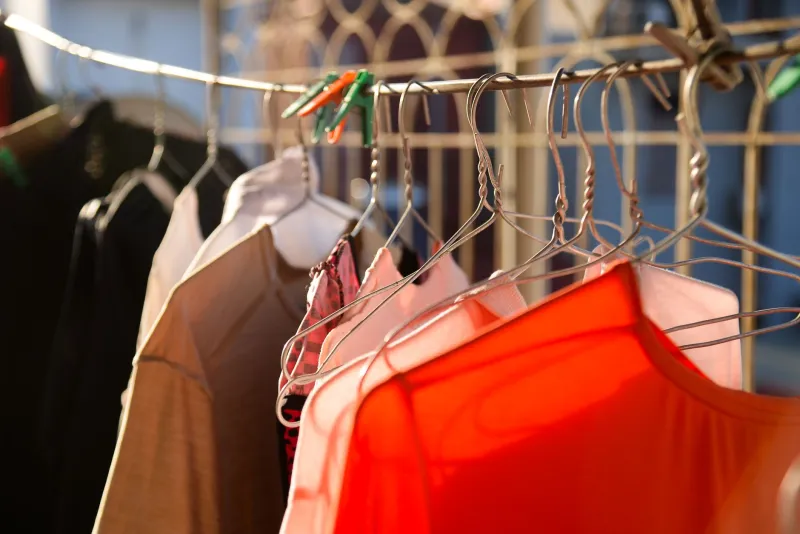
Photo: CEphoto, Uwe Aranas, CC BY-SA 3.0, via Wikimedia Commons
There is a moment in every secondhand hunt when the label says yes and your nose says absolutely not. Maybe it is a charity-shop coat that looks immaculate until you lean in near the collar. Maybe it is a car-boot jumper with a faint attic whiff that could be charming or could be the beginning of a long, losing battle. Smell is not the whole story, but it is useful data. In the UK’s crowded resale market, where every other listing claims to be ‘vintage’ and ‘rare’, your nose is often the fastest due-diligence tool you have.
Start at the collar, not the hanger
A garment’s smell is rarely uniform. Perfume sits where skin sits: collars, cuffs, underarms, the inside of a scarf. Smoke clings to lining and seams. Damp likes hems, armpits, storage creases and anywhere a garment has been folded against a cold wall. Pet odour tends to lurk in padding, quilting and anywhere a cat has decided to make a bed.
In a shop, ask before you start pressing your face into things. A short, polite sniff near the collar, underarm and lining is usually enough. Do not sniff for too long in one go; your nose gets tired and starts editing out the very thing you need to notice. If the shop is heavy with scented candles or diffusers, step towards the door or take the item into better air. Online, ask direct questions rather than ‘does it smell?’: any smoke, damp, mothballs or pets? Can the seller check the lining and underarm seams? A vague answer is information too.
The fixable three: attic mustiness, mothballs and old perfume
Attic mustiness is the classic secondhand smell: dry, dusty, slightly closed-in. If the garment is otherwise sound, with no tide marks or speckling, it is often fixable. Air it outside on a dry, breezy day for 24 to 48 hours, in the shade rather than direct sun. A cotton bag of bicarbonate of soda in the wardrobe or under the bed can help, but give it time. Wash what can be washed according to the care label. Wool should be hand-washed cool with a proper wool detergent, then dried flat and shaped; do not wring it like a dishcloth.
Mothballs are a different beast. The old-fashioned naphthalene smell is piercing, headache-inducing and deeply stubborn. It is not necessarily a sign of dirt, but it can take weeks of airing, washing and sometimes a trip to a dry cleaner to shift. Camphor is gentler but still persistent. If you need the piece for an event this weekend, walk on. If it is a £6 wool blazer with beautiful buttons and you have a spare room and patience, it might be worth the project.
Old perfume is the most deceptive. A faint trace of powdery scent can feel romantic; a heavy cloud of it can be a mask. Perfume oils settle into linings and seams and can outlast several washes. Air first, then wash or dry clean, and be honest about whether the smell gives you a headache. A beautiful dress that makes you sneeze every time you wear it is not a bargain.
Smoke: sometimes fixable, sometimes not
Light cigarette smoke on a washable cotton shirt may lift with a good wash and plenty of air. Heavy smoke in a wool overcoat, leather jacket or quilted lining is harder. Tell the dry cleaner specifically that it is smoke, not just ‘musty’. Do not try to cover it with perfume or fabric spray; that usually creates a more complicated smell. Woodsmoke is often more forgiving than cigarette tar, but yellowing at the collar and cuffs is a warning that the smoke has been there a long time.
The red flags: damp, mould and pets
Damp is the one to take seriously. A cold cellar smell, a wet-plaster smell, or ‘wet dog’ when no dog is present should make you pause. Check underarms, hems, lining and seams for tide marks, black speckles or greenish bloom. Mould spores can sit in padding, wool and leather, and a normal wash may not reach them. This is not a ‘give it a good airing’ situation. For the sake of your lungs and your wardrobe, leave it.
Pet contamination is similarly tricky. A faint whiff may wash out of a cotton shirt; urine in foam padding, quilted coats or shoe linings is a different matter. Enzymatic cleaners can help, but vintage linings and fixed padding are difficult to treat properly. Cat spray is especially persistent. If the smell hits you at the crotch, underarm or inside a bag, treat it as a no. A strong ammonia smell is not the same as ordinary sweat, and it rarely improves with a gentle hand wash.
The British weather problem
Airing outside is easier in June than in November. On a dry, breezy autumn day, hang the garment under cover, away from drizzle and direct sun. Do not park it on a radiator: heat can bake odours into wool and damage fibres. A spare room with a cracked window and a bowl of charcoal is often better than a bathroom, where steam and damp undo your work. And be realistic about washing. Old care labels can be optimistic, and vintage rayon, silk and tailored wool do not forgive a hot machine cycle. If in doubt, dry clean, and choose a cleaner who understands vintage trims and buttons.
When to walk away, even at £3
Walk away if the smell makes you recoil, if there are visible signs of damp or mould, if pet urine has reached non-washable padding, or if the seller is evasive. Walk away if the mothball haze gives you a headache and you need the piece soon. A cheap find that sits in quarantine for months is not cheap; it is a lesson with a price tag. In 2026’s resale boom, plenty of ‘vintage’ is simply old and badly stored. Your nose will not tell you everything about quality, but it will often tell you when to keep walking.